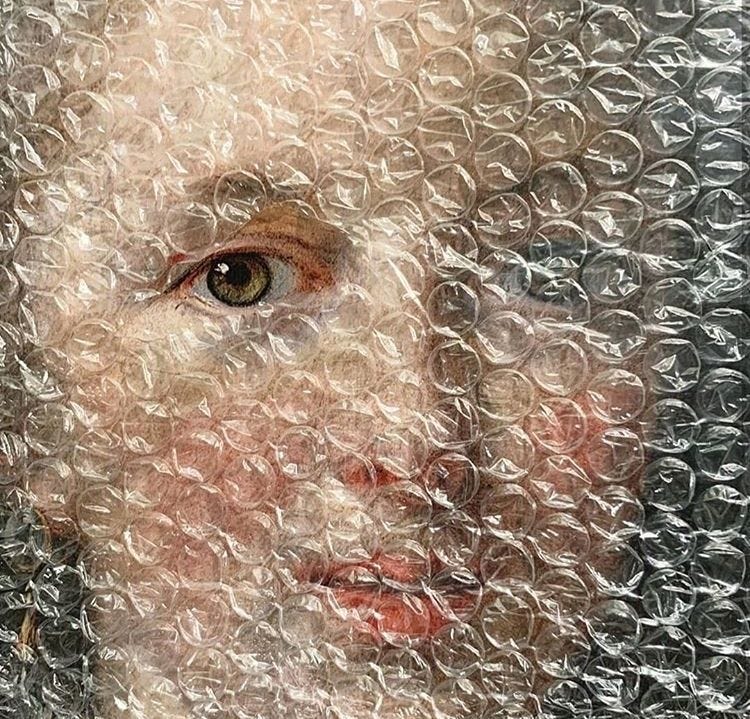
When brand becomes autonomous.
Who's in charge here?

What happens to brand, power, and human responsibility when AI systems no longer wait for us to decide.
Touch Grass is my Substack on the evolving world of brands and creativity, written with dirt under the nails. It’s a slower, more grounded look at how brands actually show up in the world, how strategy holds up once it’s in motion, and what judgment, taste, and restraint look like when attention is the medium.
Never would I imagine myself writing strictly about AI on a Substack called ‘Touch Grass’, but a recent article from Zoe Scaman ended with a compelling prompt: what’s the alternative to the limited ways in which we’re talking about AI? What happens if you step off of the setlist entirely? This article comes after some deep thinking about how we can take an unbiased look at AI, play it forward, and reimagine what it can positively mean across brand, marketing, and beyond. If you haven’t read that article, I do summarize it below, but I recommend hopping over before coming back here.
Every conversation we’re having about AI right now falls into six loops:
Fear
Hype
Efficiency
Exceptionalism
Tactical
Minimizing
Zoe Scaman brilliantly lays out these tropes for us in her latest article, The Six Loops. She exposes how our language around AI is shaped by a working model that assumes pauses, handoffs, and decisions made at human speed. What happens when step outside these loops and truly take a look at what this tech could entirely re-imagine across the playing field? What’s unfolding now operates on a different axis entirely.
All signs point toward probabilistic systems.
To start, let’s try our best to take an unbiased look at what artificial intelligence is today and just around the corner. AI doesn’t just help us make things. It predicts, acts, adjusts, and, maybe the most impressive breakthrough as of late, it autonomously continues. When prediction becomes continuous and action becomes automatic, the structure underneath brand, marketing, and strategy quietly rearranges itself.
At its core, this is prediction technology. It absorbs signal, models likelihood, and returns outcomes shaped by everything it has seen before. Add agency and it begins to move on its own, completing tasks, testing assumptions, responding to the world while we’re offline (or chronically online elsewhere, if we’re frank). Add scale and it can do this millions of times over, simultaneously. These conditions create something unfamiliar. We’re now talking about a system that doesn’t operate in moments — input > output > feedback as input > refined output — but in flow.
Brand, under these conditions, stops behaving like a sequence of decisions and starts behaving like a field of possibility. Imagine the implications for marketing: instead of just one message adapted across channels, there are countless expressions unfolding at once, each tuned to a person, a context, or a moment. The brand exists in parallel states, sensing response and adjusting in real time, collapsing toward whatever holds. This isn’t animation or personalization as we’ve known it. It’s plurality. A brand distributed across potential realities, always mid-formation, constantly pruning branches of possibility and adapting to culture in real time.
What’s left for us mere humans?
When production isn’t a constraint anymore, the work needs to move somewhere else. Choice becomes heavier and responsibility becomes even more visible. If a system can anticipate what we would have said and act before we even arrive at a point, then the value of human involvement shifts away from execution and toward authorship at a deeper layer. The question stops being how quickly we can decide and starts being what we are willing to let decide for us.
This is where the role of the strategist really gets interesting. Strategy has for a long time been about direction; choosing paths under uncertainty. In a world where futures can be simulated and tested at hyper-speed, the work of a strategist becomes less about selecting moves and more about defining the boundaries within which moves are allowed to happen. It’s a simple shift from driving the race car to mapping the track. The strategist becomes more like a steward of intent, setting the conditions that guide the system’s behavior over time. The work lives in constraints, values, and tradeoffs that the system is never permitted to make, even when the data suggests otherwise.
Creative work undergoes a similar shift. When expression is basically infinite, production isn’t a measure of value anymore. Creative leaders can instead own curation — deciding what kind of world the work is allowed to reflect back. Taste, restraint, and discernment begin to matter more than output. Creative direction becomes less about producing artifacts and more about shaping the atmosphere in which artifacts emerge.
Marketing, as you can imagine, follows. When response is instantaneous, feedback loops are super tight, and adaptation just happens continuously, a marketer’s role drifts away from orchestration and toward curation of signal. They get to determine things like:
What gets listened to?
What deserves the most weight?
What gets ignored?
When do we let the system run and when do we interrupt it?
The powers that be.
This might start to paint the picture of a happy little democratic machine of seamless tinkering. But history tells us power rarely dissolves; it simply relocates. In this hypothetical future, power redirects. It settles into ownership of systems, access to data, control of success metrics, and the legal and technical frameworks that define what optimization even means. Every “brand” as we know it essentially turns into a platform. Every company becomes, in some way, a technology company. In this reality (if I’m even a little bit right about how this plays out), the big question isn’t whether machines will act autonomously, but who gets to decide what they are acting toward.
The second big question is, when the tech practically runs itself and only a few are allowed at the top to decide how and why they run, what does that open up for humankind?
The upside being an artisanal renaissance.
We are, at our core, creators.
My hope? Craft returns. The handmade object carries infinitely more weight in this new world because it signals something rare: that something was made outside a continuous decision loop, guided by expression rather than optimization. Imperfections are sought after. The visible mark of a human becomes a new kind of trust.
In a landscape of infinite expression, meaning builds around what we refuse to automate.
Who gets to decide?
If systems can predict, act, and adapt on our behalf, then we are freed to ask a harder question:
What will we choose to remain responsible for when we no longer have to be?
The future ultimately comes down to judgment and values. How we define success. The shape of culture. The infrastructure that supports actual human life, not just performance metrics. Intentional Communities. Shared experiences. Work that connects people back to one another and to the world they live in. Maybe, if we let AI take its course and hold those still in power accountable to the decisions they’re left with, we gain the freedom and collective motivation to return to the things we never should have abandoned in the first place. Maybe, just maybe, the advancement of AI could actually be our saving grace.
Maybe I’m just an optimist. But one thing remains true: the machine can only extend the patterns we (the people) reward. It cannot decide what should matter next.
That choice remains ours.